
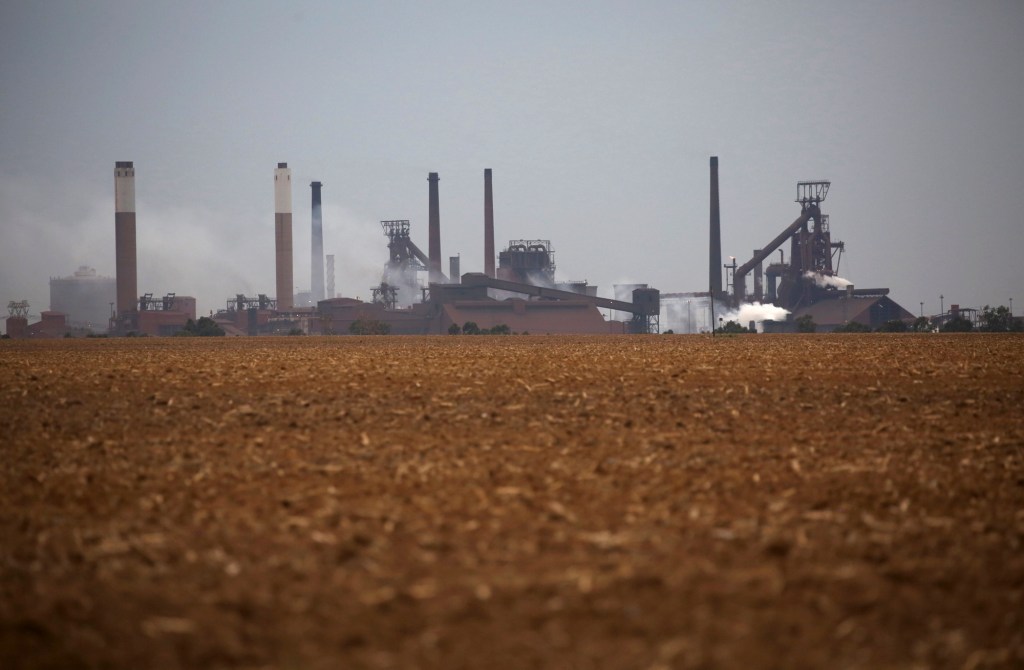
Contributing about 70% of South Africa’s steel, ArcelorMittal South Africa (AMSA) has become a key player in the country’s industrial landscape. As the largest steel producer in the country, it plays a vital role in the country’s infrastructure development. AMSA is current facing severe financial crisis and has issued stark warnings about substantial losses. They have continued to urge the South African government to step in with urgent intervention. This issue is compounded by the fact that the steel industry, locally and globally, are both facing challenges including rising cost, declining demands and geopolitical uncertainties.
AMSA’s struggles has the potential to not only affect ArcelorMittal as a company, but also will likely create a knock-on effect across South Africa’s economy. Therefore, as of 17th of October 2024, AMSA made another round of request seeking urgent government actions, including but not limited to financial assistance and import tariffs protection. In their plea, AMSA positioned themselves as a strategic asset, and that its demise would undermine the country’s development goals. Reiterating the idea that their survival is vital not just for their business but also broader health of South Africa’s economy.
Factors Contributing to ArcelorMittal South Africa’s Decline
There are several factors that caused the decline of AMSA’s financials. One of the main reason would be the rising operational cost due to the significant increase in energy prices, inflation in South Africa and increase in raw material cost such as iron ore. The rising energy tariffs in South Africa in turn, is a result of several factors such as infrastructure failures, its energy grid’s reliance on coal and debt issues faced by Eskom (South Africa’s monopoly power utility). The combination of these key factors drive up AMSA’s production cost, shoving them deeper into financial distress.
On top of rising cost, the domestic steel demands for steel has seen a significant drop, due to slow economic growth, reduction in coustruction activity and contraction in mining activity. Over the past decade South Africa’s steel demands have been shrinking steadily, but significant decline as much as 40% was observed in the wake of COVID-19 pandemic. As of 2024, it was reported that demand remains significantly below historical levels, with overall domestic consumption down by 15-20% compared to five years ago. Cheap imports and the overall global market conditions has excavated AMSA’s problems of maintaining profitability.
The plight that AMSA is facing is not something that happened overnight. It is a result of difficulties being compounded over the the past decade, One of the most significant challenge happened in 2015 when global steel prices plummeted due to weak global demand, falling commodity prices and Chinese steel overproduction. This resulted in steel manufacturers lowering prices, eroding their already slim margins. At the same time, South Africa was affected by sluggish economy, limited infrastructural developments. To add fuel to the fire, energy prices in South Africa went up without any improvement in efficiency, all adding to the strain on AMSA’s profitability. COVID-19 pandemic in 2020 further exacerbated the situation deepening AMSA’s financial woes. By 2023, these cumulative factors pushed the company to its brink, forcing it to seek urgent intervention.
ArcelorMittal South Africa’s Plea for Government Intervention
Faced with mounting losses, in 2023 AMSA made its plea to the South African government for financial relief and government incentives to mitigate the effects of rising energy cost, load shielding, and declining demand. On top of seeking financial reliefs in the form of subsidies and tax breaks to manage the soaring operational cost, AMSA called for measures to address the existential energy crisis that that the country is facing. On the 17th October 2024, AMSA made another plea to the South African government reiterating the same points made in their plea in 2023, but placing greater emphasis on the immediate risk of plant closures and job losses if no action is taken. The 2024 plea reiterates the strengths and demands made in 2023, reflecting the deepening financial crisis AMSA is facing.
As of 20th October 2024, South African government has not formally responded to the plea made by AMSA in 2023 nor those made a few days back. The latest request made in 2024 would most likely spark debate over whether the state should even intervene in such situations. Similar discussions started after AMSA seek South African government support in 2023. AMSA’s argument is that the survival of the company plays a pivotal role in the nation’s economy, claiming that thousands of jobs are at risk and impact on steel reliant industries given that they produce up to 70% of the nation’s steel. However, standing in the shoes of the South African government, it has to careful weight the economic impact of such an intervention against its fiscal responsibilities. The nation has been dealing with growing national debt and large budget deficits, bailing out AMSA could impact their ability to fund other crucial areas like social services, infrastructure and education. In addition, if they were to bail out AMSA, it may set the precedent for other industries facing similar plight, opening the floodgate and increasing the financial burden on the government. Then there is the question of the long term viability of AMSA’s business model and its sustainability in the long run.
There are other possibilities that AMSA could explore to stabilise their operations in South Africa. One possibility is to restructure by consolidating underperforming plants or shifting to more efficiency production methods to reduce costs. AMSA could also form strategic partnerships or JVs with other steel producers locally or globally, to reduce overheads and share resources. Diversification into related industries like recycling or renewable energy projects is another typical method that other struggling steel producers have explored. Last but not least, they could raise capital through equity or debt. These are some of the options that AMSA could explore to reduce its reliance on government aids, however, its feasibility remains a big question. As explored earlier, one of the key issues that AMSA is facing is rising energy cost and existential energy grid issues. No matter how we look and explore the possibilities above, they are theoretically feasible, but will face significant challenge if the nation’s ongoing energy crisis is not resolved.
The Broader Impact on South Africa’s Economy
When we look at large manufacturing corporations such as AMSA, they are usually the core of a larger economical ecosystem, connected to many nodes. In the case of AMSA, they could be considered the core of South Africa’s industrial economy, pumping steel to the nodes, with many industries such as construction, manufacturing and mining dependent on them. Not forgetting the logistics and transportation industry linking the core to the nodes. Should AMSA’s financial troubles not improve, there would be a crippling effect throughout the whole ecosystem, potentially leading to job losses, delayed infrastructural projects and further destabilising the nations economy.
If AMSA is not able to improve its situation, we would see a rise in imported steel in South Africa to meet its domestic demands. This will cause trade deficits to increase and drop in local economic activity. In the long runs, it will lead to a very ugly situation whereby the nation becomes overly dependent on imports, driving prices higher and diminishing the competitive advantages for local industries.
How ArcelorMittal South Africa’s Future Will Impact the Global Company
Although AMSA’s contribution to ArcelorMittal’s overall revenue is small compared to their operations in Americas or Europe, we cannot underestimate its strategic importance. AMSA represents a vital piece in ArcelorMittal’s global puzzle. South Africa has an abundance of natural resources such as iron ore and coal, and therefore, the existence of AMSA plays an pivotal role in ArcelorMittal’s raw material supply chain, supporting it’s production lines in other parts of the words. In the event that AMSA fails or significantly reduces its operation, it will force ArcelorMittal to source raw materials from from potential more expensive sources, or shifting it’s production locations, either case, increasing the overall cost. This will ultimately weaken ArcelorMittal’s position and competitiveness in this challenging global steel market.
The collapse of AMSA would also diminish ArcelorMittal’s presence in the Africa market. This region has significant long term growth potential and ArcelorMittal risk missing out on future opportunities, The potential for infrastructure developments in Africa is huge and is expected to continue expanding. If AMSA fails, ArcelorMittal will face both financial loss and long term strategic setback on the global stage.
Conclusion: What’s Next for ArcelorMittal South Africa?
What AMSA is facing is not something that is unique, however, the circumstances surrounding it make the whole situation extremely intense. The fact that AMSA is so intertwined in South Africa’s industrial and economical structure means that its struggles ripple through various sectors, amplifying the impact on infrastructural development, manufacturing output, and employment rates. For a company of a scale and influence like AMSA to face financial distress, it highlights the broader issues that the South Africa economy is facing, rising operational cost, declining demand for key industrial product and more importantly unreliable energy supply.
AMSA’s survivability will depend in how the South African government and stakeholders of AMSA will act to provide the necessary support. If no action is taken, the likely outcome that we will witness is AMSA plant closure, job losses and potentially withdrawal of ArcelorMittal from the South African market. If the South African government were to take decisive steps to put in place right policies such as energy reforms, tariff protection against cheap imports, and financial aids, AMSA could stabilise and continue its contribution to the South Africa’s economy.
In the coming months, all eyes will be on how the South African government will respond to AMSA’s plea. It is apparent that the future of AMSA will not only affect ArcelorMittal as a whole, but more importantly, the thousands of jobs and businesses that depend on it in South Africa.
 The Price Influence
Leave a comment